Home / Use cases / Year one without a missed filing
Use case · for founders
Year one of a new nonprofit without a missed filing
Updated September 2026
Two founding steps build the calendar. The fundraising step checks your state. A name and a reminder go on every line. Here is how a first-year founder files the 990-N on time.
The problem, in your words
You got the determination letter. Nobody told you what happens next, so here it is. A Form 990 of some kind every year, starting sooner than you think. In most states, a registration before you ask anyone for money. A corporate filing you will forget exists. Miss the 990 three years running and the IRS revokes the exemption you just earned.
You are not behind. You are at the start of a calendar nobody handed you. The fix is to have it handed to you, with dates, on the day you finish founding.
Two founding steps build the calendar for you. Finishing the 501(c)(3) step puts the first Form 990 on it. Choosing the fiscal year sets its date. The fundraising step looks up your state's charity regulator and tells you if you need to register before you solicit. Every line gets an owner and reminders. In year one you record two or three filings and never wonder what you missed.
The org in this example
Starter band (under $50K a year, $0)
An invented example, sized like the orgs Ember is built for. Not a customer.
The walkthrough
The 501(c)(3) step starts the calendar
The day you mark the 501(c)(3) step done in Ember Spark, Ember Compliance fills in its first few lines by itself. A Form 990. A state charity registration renewal. A corporate report your state wants every so often, with a placeholder date for you to confirm. You have not opened that app yet, and it is already waiting for you.
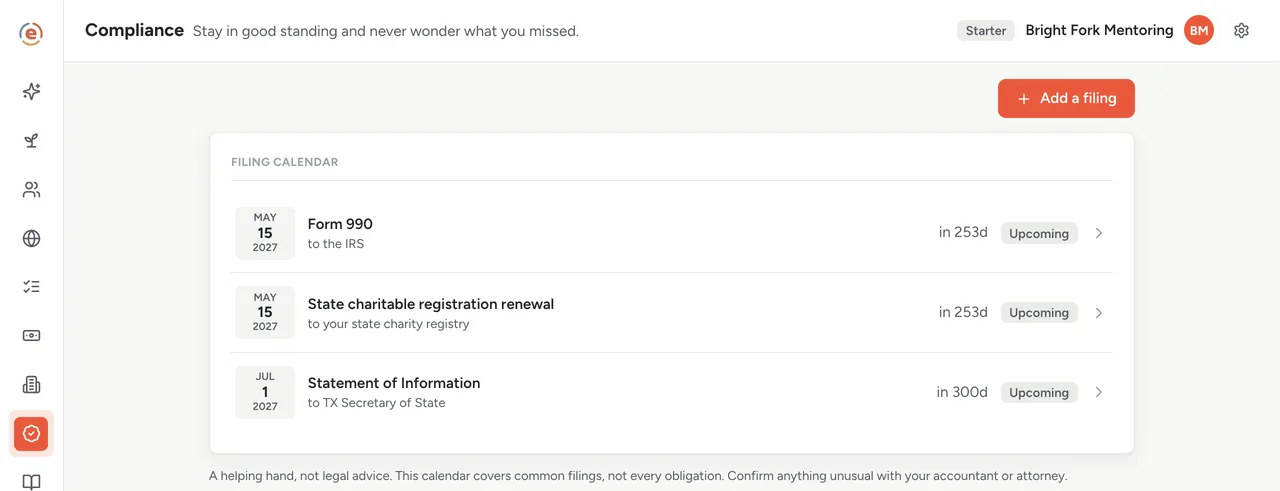
Filled in from step six, before you have opened the app. Demo data. Set the fiscal year, and the 990 gets its date
The last step asks when your financial year ends: March, June, September or December. Pick December and the 990 line changes to read May 15, which is four and a half months after year end. Which version of the 990 you file depends on how much money came in; under $50,000 it is the 990-N, a postcard you fill in online. The deadline is the same whichever one you file.
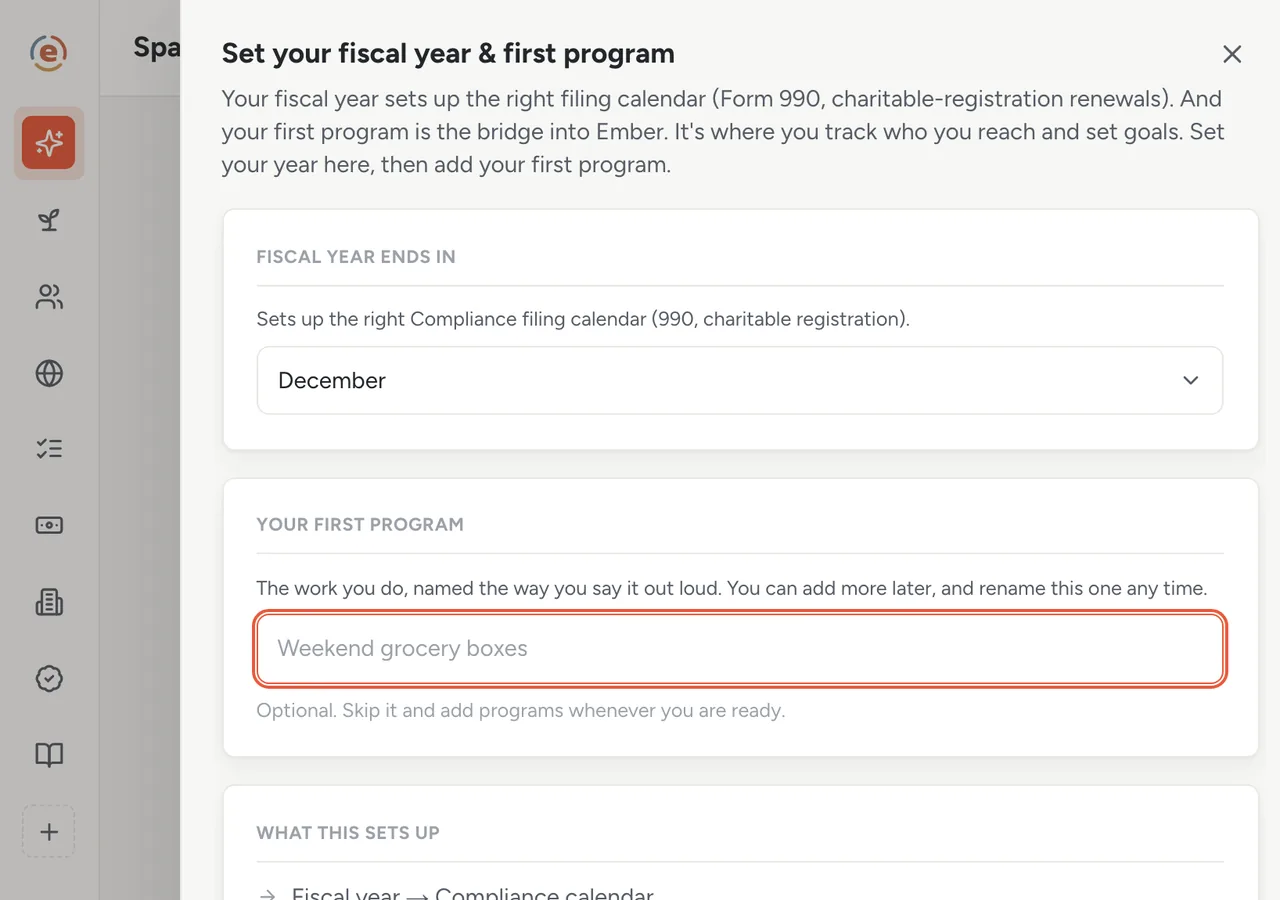
Pick December, and your first 990 date follows from it. Demo data. Register before you fundraise
Step seven looks up whichever office regulates charities in your state. In Texas, there is no general registration to do, and the step tells you so, along with the handful of causes that are the exception. In New York you would get the Charities Bureau and a link to it instead. The rules state by state fit on one page.
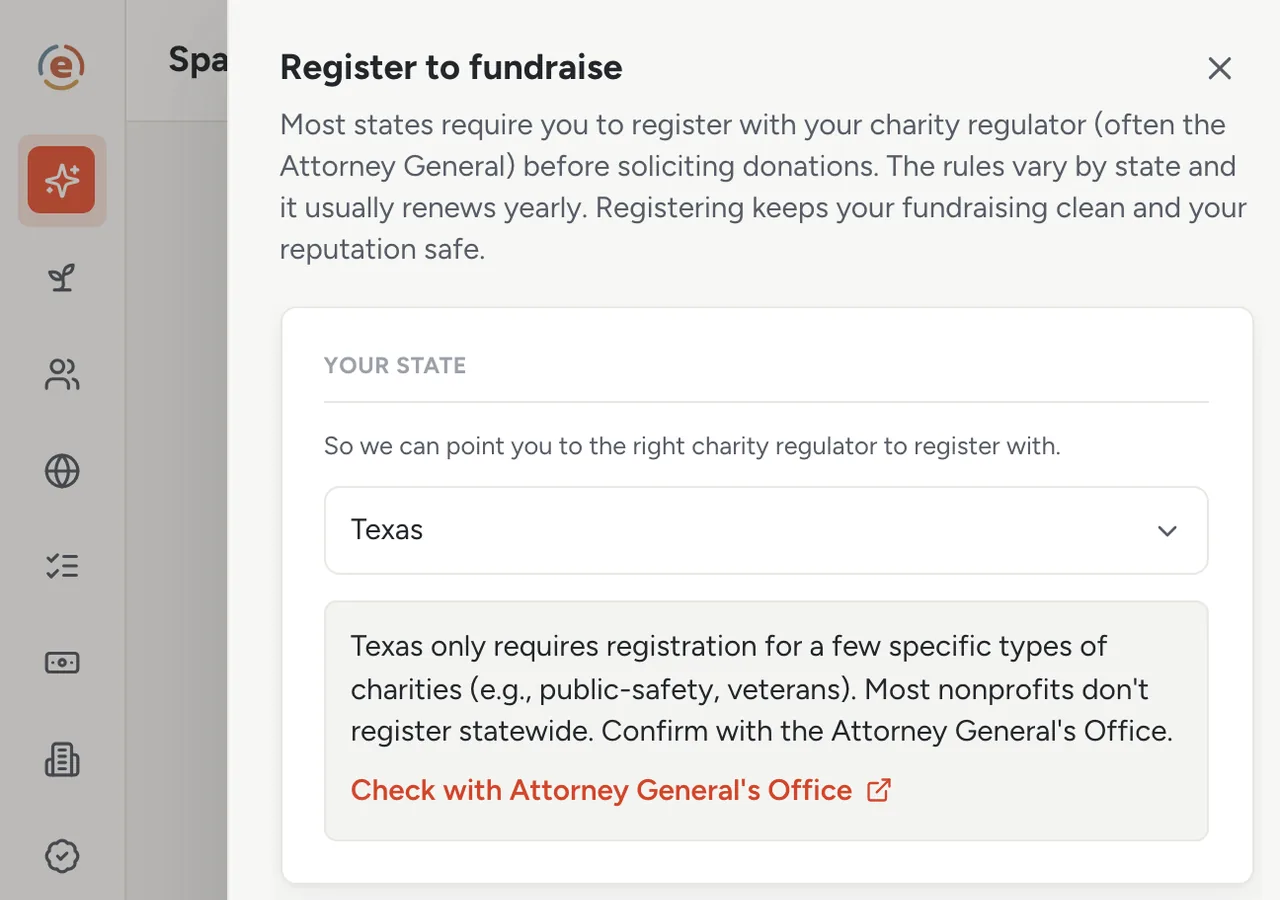
Texas, looked up: no general registration, and the exceptions named. Demo data. A name and a reminder on every line
In year one you are the only person here, so nothing needs assigning yet. A filing nobody has been given reminds whoever owns or administers the account, which is you. You hear about it 30 days out, 7 days out, on the day, and every week after that until you record it as filed. When a treasurer joins in the spring, hand them the state renewal in one change. Anything assigned to a person also rises to the top of their list in Ember Work.
Record the money from day one
In Ember Budget, set a small plan for the mentoring program and record every gift and every cost against it. The first 990-N barely asks you anything. But the first grant application will ask what the program costs to run, and by then you will have the answer. Money in and money out, in one place, from the first week.
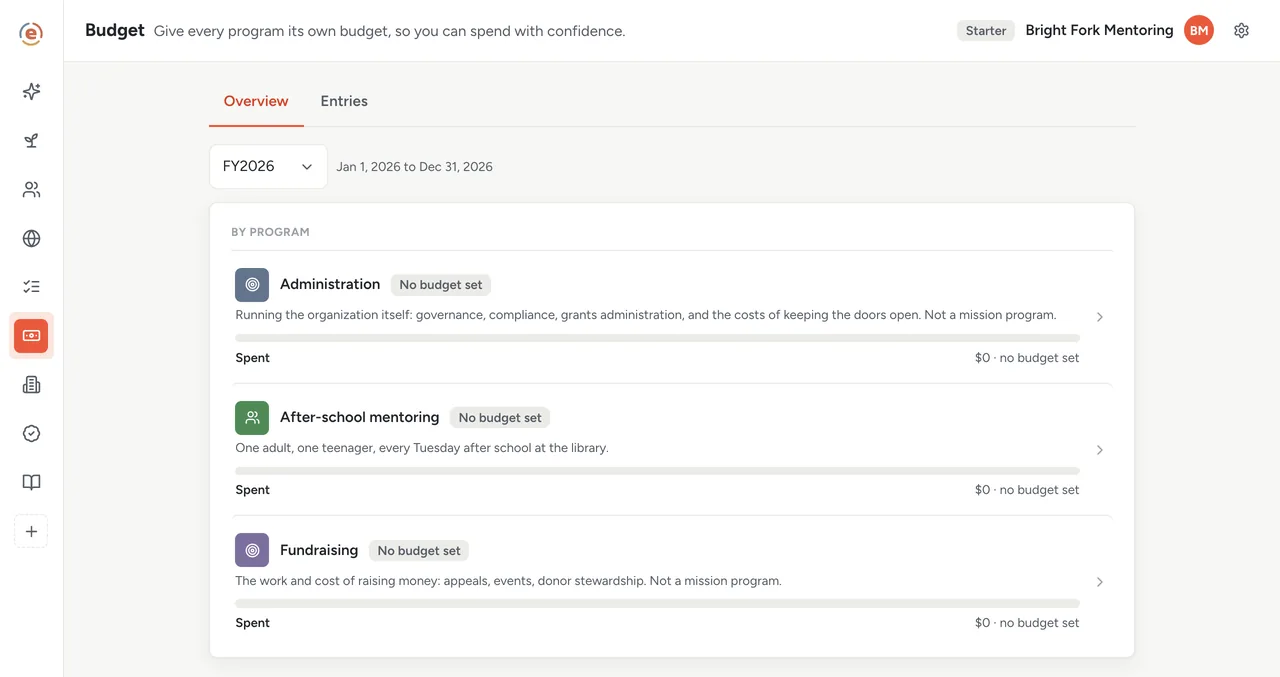
Year one's money, by program, from the first gift. Demo data. May 15: file it, record it, done for a year
The 990-N is a short form on the IRS site, linked from the line itself. File it, then record it in Compliance with the date and the confirmation number. The row moves on: next year's due date is already sitting there, waiting. While you are there, add the two deadlines only you know about, the insurance renewal and the county permit, each with its own date and its own person.
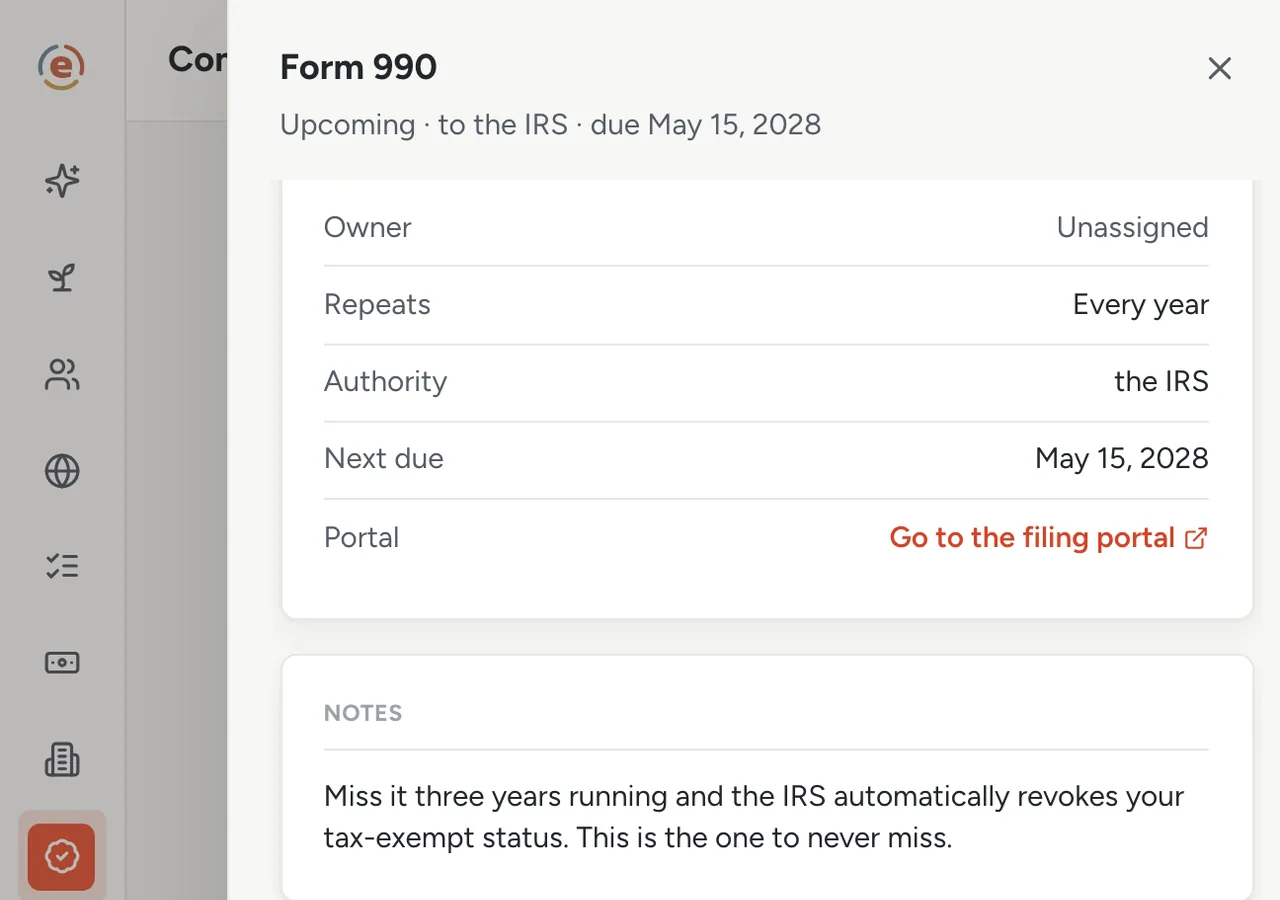
Recorded once. The calendar already has next year's date. Demo data.
Who does what
If you are the founder
The calendar exists before you know what should be on it. You add the two things only you know about and answer emails when they come.
If you are the treasurer who joins later
The state renewal becomes yours with one change. Its history, its portal link and its notes come with it.
If you are the founder's first admin
You can see the whole calendar and hand yourself the filings that are yours. A missed date is visible before it is missed.
- A newly exempt org with no one who has filed a 990 before.
- A founder who is the whole staff and will be for a while.
- A state where fundraising registration is a real question.
- A wish to have year one's money recorded by program, so year two's grant has a number.
What it costs at this size
An org with a budget under $50K a year sits in the Starter band: $0, every app, unlimited users. The calendar, the reminders and the budget are all in it. State fees and any IRS fees are paid to them. See every band.
Free templateNew-nonprofit survival guide
The deadlines, the free tools and the key dates for year one, on one page.
This is general information, not legal or tax advice. Which Form 990 you file, which state registrations apply, and when they are due depend on your own facts and change over time. Confirm every deadline with the IRS, your state, or a professional.
The Ember tool for this stepEmber Spark
A 12-step founding checklist that writes each finished step into the rest of your workspace.
The Ember tool for this stepEmber Compliance
A plain-English filing calendar with an owner on every deadline and a reminder 30 days out.
The Ember tool for this stepEmber Budget
Money in and out by program, restricted kept apart from flexible, with a spend bar against the plan.
Sources: IRS: Form 990-N (e-Postcard) and automatic revocation of exemption, read 3 September 2026. The org and people on this page are an invented example; Ember has no customer data to report yet. Product behavior is described as built on 3 September 2026 and re-checked at each release.